
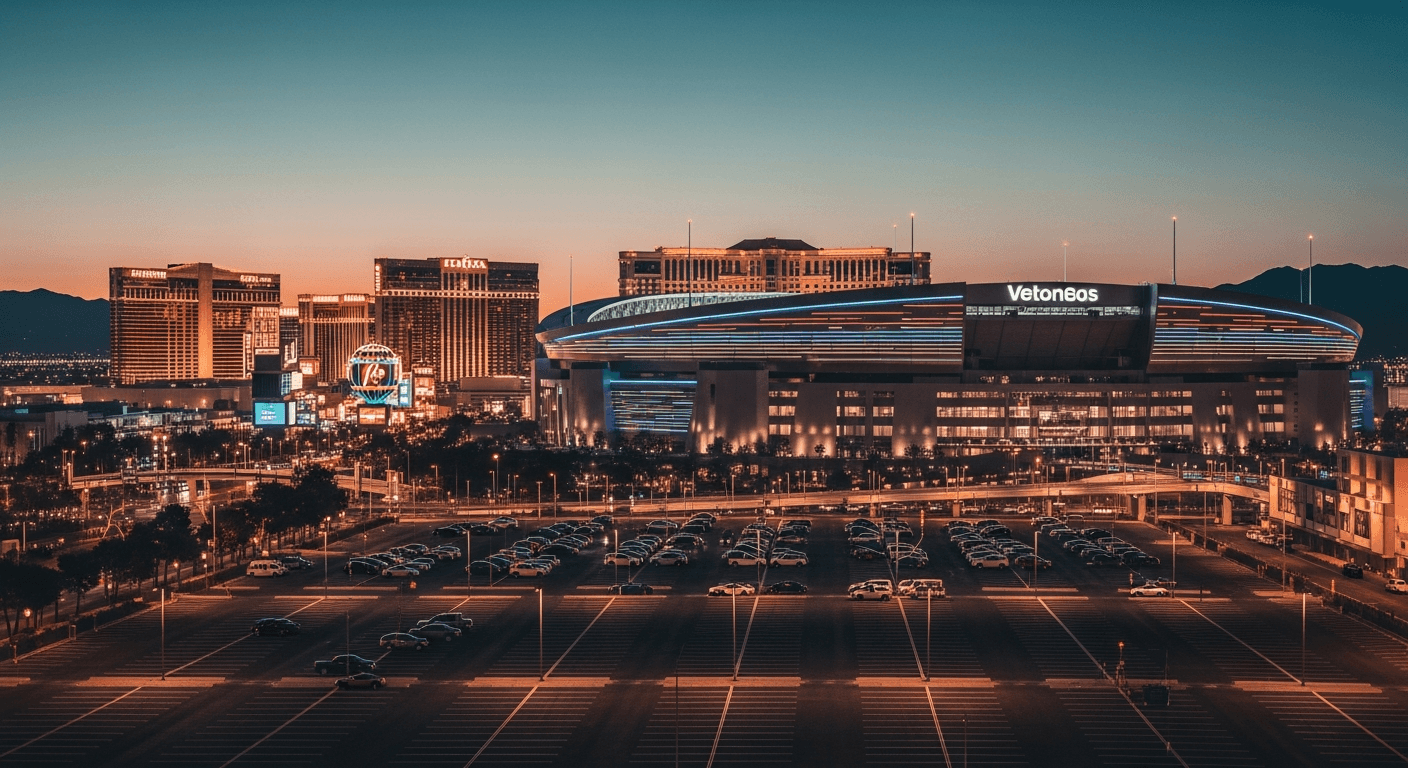
The 23 Cities That Didn't Make the Cut
Austin scored 60.5 and still didn't crack our top 30. Here's why 23 cities with real fans, real teams, and real infrastructure fell short.
Archived edition: This article preserves the Spring/Summer 2026 edition (30 ranked, 23 unranked) and its original four-pillar tables. The current Fall/Winter edition ranks all 53 destinations across five pillars. See the current rankings.
Austin scored 60.5 out of 100 in the SportCation Index. That would place it 11th overall if raw score were the only thing that mattered. It has $114 tickets, $112 hotels, a perfect 10 Energy Factor, and direct rail to the stadium.
It didn't make our top 30.
Neither did 22 other cities -- places with real teams, real fans, and real infrastructure. Every single one of them has the same fatal flaw: zero prime weekends where two or more franchises from different leagues have home games in the same Friday-through-Sunday window.
The scores look respectable. The overlap isn't there.
What the Cut Line Actually Means
The SportCation Index ranks 53 cities on a 100-point scale across four pillars: Game Density (40 points), Travel Ease (30 points), Weekend Cost (20 points), and Energy Factor (10 points). The full breakdown is in our methodology post.
Thirty cities made the cut. Twenty-three didn't.
But here's the thing people get wrong: the cut line isn't a fixed score. Montreal ranks 30th with a 46.0 total. Austin, the highest-scoring unranked city, sits at 60.5 -- fourteen points higher. Austin would finish 11th if raw score were the only thing that mattered.
It isn't.
To earn a rank, a city needs real multi-sport overlap: at least one prime weekend where two or more franchises from different leagues have home games in the same Friday-through-Sunday window. Every single one of the 23 unranked cities has zero prime weekends in the Spring/Summer 2026 window. Not one. The scoring model can give you points for travel ease, cheap hotels, and a packed sports bar scene -- but without schedule overlap, you can't build a sportcation there.
That's the dividing line. Not score. Overlap.
A note on timing: This piece reflects the Spring/Summer 2026 edition of the Index (30 ranked, 23 unranked). The current Fall/Winter edition ranks all 53 destinations across five pillars, with NFL, full NBA, and full NHL schedules active. See the current rankings.
The Bubble Cities
Five cities scored above 54 and still missed out. These are the ones that sting the most, because the infrastructure is there, the fan culture is there, and in some cases the teams are there. The schedules just won't cooperate.
| City | Score | Game Density | Travel Ease | Weekend Cost | Energy | Primary Sport (SS) |
|---|---|---|---|---|---|---|
| Austin | 60.5 | 2.0 | 29.2 | 19.4 | 10 | MLS |
| San Jose | 55.4 | 2.0 | 26.8 | 16.6 | 10 | MLS, NHL |
| Raleigh | 55.1 | 4.0 | 25.2 | 17.0 | 9 | NHL |
| Ottawa | 54.2 | 4.0 | 26.5 | 13.7 | 10 | NHL |
| Orlando | 54.2 | 2.0 | 26.6 | 18.6 | 7 | MLS |
Austin (60.5) is the most painful miss on this list. The city crushes it on cost -- $114 median ticket, $112 median hotel, which is the cheapest combined weekend in the entire 53-city dataset. Travel Ease is nearly maxed at 29.2 out of 30, with direct rail to Q2 Stadium and a 15-minute airport ride. The Energy Factor is a perfect 10. But Austin FC is the only franchise playing spring/summer home games, and one team cannot create overlap with itself. Game Density score: 2 out of 40. That's not a flaw in the city. It's a structural limitation of being a single-franchise market in the warm months.
San Jose (55.4) has the Sharks and the Earthquakes, which should be enough. But the Sharks' season ends in April, and the Earthquakes play their home matches across town at PayPal Park. Those two seasons barely touch, and when they do, the games don't land on the same weekends. San Jose's 7-minute airport-to-venue time is one of the best we measured. Doesn't matter when there's nothing to double up on.
Raleigh (55.1) and Ottawa (54.2) share the same problem: they're NHL-first cities where the hockey season is winding down just as our Spring/Summer window opens. The Hurricanes and Senators each get a handful of late-season weekend home dates, but there's no second franchise to create overlap. Raleigh's $131 hotel rate and Ottawa's 10 fan institutions are wasted on a calendar that doesn't cooperate.
Orlando (54.2) has Orlando City SC and cheap everything -- $125 tickets, $129 hotels -- but no MLB, no NBA in summer, no second team to stack weekends. This is the same structural problem as Austin, just with a slightly worse Energy Factor (7 vs. 10).
Every one of these bubble cities would rank if they had one more warm-weather franchise.
The One-Trick Ponies
We call this pattern the subscore spike: a city that scores well above average in one or two pillars but flatlines in Game Density. The overall number looks respectable until you realize 30+ of those points are coming from categories that can't compensate for having nothing to actually go watch on a multi-sport weekend.
Austin is the extreme version. Its non-density subscores total 58.6 out of 60 possible -- the highest in the dataset. Its density score is 2 out of 40. That 2 is essentially a participation trophy for having a single franchise with some weekend home dates.
Memphis does this too. Score of 53.8 looks middling until you see the breakdown: Game Density 4.0, Travel Ease 22.2, Weekend Cost 17.7, Energy 10. The Grizzlies alone can't generate prime weekends, but the city itself is absurdly affordable ($110 tickets, $161 hotels) and has a 10-out-of-10 fan scene. Memphis is a great NBA city. It is not, in the spring and summer of 2026, a sportcation city.
Oklahoma City tells the same story. The Thunder are the only game in town during our window, the city is car-dependent (rail tier: car_dependent), and Game Density comes in at 4.0. But tickets run $135 and hotels $153, earning a Weekend Cost score of 17.2 that most big markets would love to have.
The pattern is consistent: single-franchise markets score well everywhere except the one category that's worth 40% of the total.
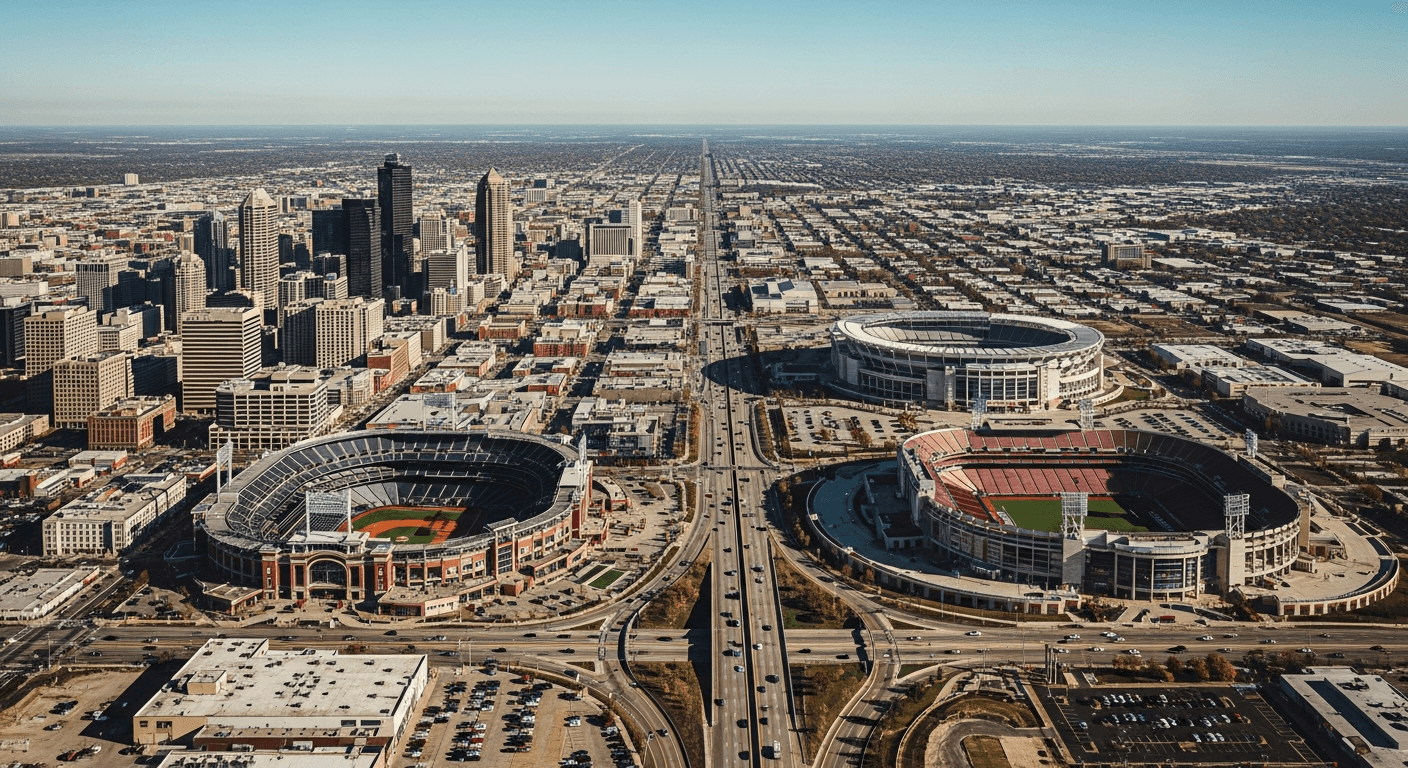
The Sprawl Tax
Some cities have teams. They have multiple teams. They even have schedules that could theoretically overlap. But the venues are so far apart that the Travel Ease pillar guts them.
Baltimore is the worst offender in the entire dataset.
Average venue distance: 46.3 miles. That is not a typo. For context, Denver -- our #1 ranked city -- has an average venue distance of 1.07 miles. Philadelphia's is under a mile. Baltimore's metro scatters its venues so far apart that the number looks like a data error. It isn't. The Orioles play at Camden Yards downtown. The Ravens (NFL, not in our spring/summer window, but still counted in the venue calculation) play across the parking lot. But Washington's teams get folded into the metro calculation, and FedExField in Landover, Audi Field in DC, and Capital One Arena stretch the average to nearly 50 miles. Baltimore's Travel Ease score is 12.4 out of 30 -- the lowest of any unranked city -- and the resulting total of 34.7 makes it the bottom of the entire 53-city index.
Phoenix (53.0) pays a milder version of the same tax. The Diamondbacks play at Chase Field downtown. The Suns and Mercury play at Footprint Center, also downtown. But the Coyotes' new arena is in Tempe, and the average venue distance stretches to 8.4 miles in a city where "I'll just drive" is the default answer to every transportation question. Phoenix has 3 spring/summer teams on paper, maxGameStack of 3, but zero actual prime weekends where they line up.
Buffalo (41.8) gets caught too. Average venue distance of 8.3 miles, and a median hotel rate of $382 that seems outlandish until you realize Bills fans have pushed the market to its limits. The Sabres play downtown; Highmark Stadium is in Orchard Park, 12 miles south. The spread, combined with bus-only transit, produces a total that barely cracks 42.
The lesson here is direct: you can have the right teams in a metro and still fail the weekend test if getting between them takes 30 minutes and an Uber.
The Scheduling Problem
Seven of the 23 unranked cities have NFL franchises as their primary or only claim to professional sports relevance. In the Spring/Summer index, the NFL doesn't exist. The season runs September to February. Which means cities that are genuinely great football towns -- places where the entire economy pivots around Sundays in the fall -- show up in our data as ghost towns.
Green Bay (47.7) is the purest case. One franchise, zero spring/summer games, zero game density, a maxGameStack of 0. The Packers are the only show, and they don't play between February and September. Green Bay's score comes entirely from Travel Ease (23.0), Weekend Cost (16.7), and Energy (8.0). That's a respectably cheap, fan-friendly city with nothing to watch for six months.
Jacksonville (50.3) has the same structural void. The Jaguars are the dominant franchise. The maxGameStack is 0 -- there aren't even single-team weekend home dates in our window. Game Density: 0.0, the only true zero in the dataset (most cities get at least 2 points for having some weekend activity). Jacksonville scored 50.3 entirely on non-density metrics: good Travel Ease (26.5), decent Weekend Cost (15.8), and a solid 8 Energy Factor. None of it matters without a game to attend.
Indianapolis (48.6), New Orleans (43.8), and Tampa (43.3) all have the same seasonal gap. The Colts, Saints, and Buccaneers are their headliners. The Pacers, Pelicans, and Lightning/Rays provide some late-season spring activity, but not enough to create overlapping weekends with a second franchise.
Tampa's case is worth pulling apart. The metro has three pro teams (Rays, Lightning, Buccaneers), which should be enough for overlap. But the Lightning's season ends in April, the Buccaneers don't start until September, and the Rays are the only team playing through summer -- alone, in a metro that's car_dependent with a 2.9-mile venue spread. Game Density: 6.0. Total: 43.3. Three franchises, and the city still can't build a single multi-sport weekend.
These cities will look different in the Fall/Winter edition when the NFL schedule activates. That's not a maybe -- it's arithmetic. A city like Indianapolis, which has the Colts and the Pacers playing simultaneously from October through December, should generate prime weekends without much effort. Same for Tampa with the Bucs and Lightning, or New Orleans with the Saints and Pelicans. The schedules overlap by default in the fall.
The Fall/Winter edition has since published. See the Comeback Watch update below, or check the live rankings directly.
The Canadian Discount
Four Canadian cities missed the cut: Ottawa (54.2), Calgary (52.8), Edmonton (52.6), and Winnipeg (43.6). They share some traits worth grouping together.
The exchange rate helps. All Canadian city costs are normalized to USD at the 0.74 rate used in our model, which effectively discounts ticket and hotel prices by about 26% compared to what you'd actually pay in local currency. Edmonton's $275 median ticket in USD is about C$372 -- not cheap. Calgary's $116 hotel in USD is about C$157 -- reasonable.
But the exchange rate can only do so much when the underlying structure is wrong.
All four cities are single-franchise markets in the Spring/Summer window. Ottawa has the Senators (NHL). Calgary has the Flames (NHL). Edmonton has the Oilers (NHL). Winnipeg has the Jets (NHL). Each of these teams is wrapping up its season in April, playing a handful of late-season and possible playoff games, and none of them has a second franchise to overlap with.
| City | Score | Teams (SS) | Median Ticket (USD) | Median Hotel (USD) | Rail Tier | Fan Institutions |
|---|---|---|---|---|---|---|
| Ottawa | 54.2 | Senators | $190 | $189 | rail_near | 10 |
| Calgary | 52.8 | Flames | $245 | $116 | rail_near | 10 |
| Edmonton | 52.6 | Oilers | $275 | $136 | direct_rail | 10 |
| Winnipeg | 43.6 | Jets | $195 | $144 | bus_only | 1 |
Winnipeg stands out for a different reason: Energy Factor of 1 out of 10. Only one verified fan institution near the venue cluster. This is a hockey-mad city with a fiercely loyal fanbase, but the walkable game-day infrastructure around Canada Life Centre is sparse. Combined with bus-only transit and a Game Density of 4.0, Winnipeg's total of 43.6 is the second-lowest among the 23.
The Canadian cities that did rank -- Toronto (67.9), Vancouver (53.1), Montreal (46.0) -- all have at least two franchises creating schedule overlap in the spring. Toronto has the Blue Jays, TFC, and the Raptors' tail end. Vancouver has the Whitecaps and the Canucks. Montreal has CF Montreal and the Canadiens. Even one prime weekend is enough to cross the ranking threshold.
For the four that missed? Adding a CPL (Canadian Premier League) or summer-active franchise would change the math. Until then, they're NHL-only outposts in a window where hockey is winding down.
The Quiet Misses
A few cities in the middle of the list don't fit neatly into any of the categories above. They're worth mentioning individually because each has a specific, identifiable problem.
St. Louis (54.1) lost the Blues to the spring/summer schedule squeeze and never replaced the Rams. The Cardinals (MLB) are the only warm-weather franchise, with a maxGameStack of 3 and decent Travel Ease (26.1) thanks to venues near downtown and light rail access. The city scores well enough on infrastructure that an MLS expansion would likely push it into the top 30 overnight. St. Louis CITY SC plays in MLS, but the team is indexed under a separate metro entry. Without that overlap, St. Louis is another one-team town in summer.
Sacramento (50.5) has the Kings and -- during spring -- some overlap with the republic's (USL) schedule, though USL doesn't count in our model. The Kings alone produce a maxGameStack of 2, but no prime weekends. Hotels run $268, which is the real surprise: Sacramento is somehow more expensive to stay in during spring weekends than cities twice its size. That Weekend Cost subscore of 11.1 is a significant drag.
Newark (48.8) is the oddest entry on this list. The Devils play at Prudential Center, which is 13 minutes from the airport and has good rail access. But Newark is essentially a satellite of the New York metro -- and while the New York metro itself ranks 4th overall, Newark as a standalone city doesn't generate its own multi-sport weekends. The Devils' season winds down in April, and no other franchise calls Newark home. It's a city with great bones -- Game Density aside -- living in the shadow of a neighbor that gets all the credit.
San Antonio (50.1) runs on the Spurs alone. Bus-only transit. Hotels at $247 are surprisingly steep. The Spurs' NBA season ends in April, and there's no baseball, no MLS, no summer action. Victor Wembanyama has made San Antonio relevant again nationally, but that doesn't help the schedule math in June.
The Comeback Watch
The Fall/Winter edition of the SportCation Index will run a different calculation. The NFL activates. The NBA and NHL are in full swing from October onward. Several of the 23 cities on this list are almost certainly going to look different.
Here's where we'd put our money.
Tampa should jump. Buccaneers (NFL) + Lightning (NHL) + Rays (MLB's final month) creates a window in September and October where three-franchise overlap is plausible. Tampa's Travel Ease will still lag -- car_dependent transit is hard to fix -- but the density boost could be enough.
Indianapolis gets the Colts back. Colts + Pacers playing simultaneously from October through December, both in a tight downtown cluster (0.52-mile venue distance, one of the best in the dataset), should produce multiple prime weekends. The 22-minute airport ride and bus-only transit hold it back, but the density math changes entirely.
Jacksonville, Green Bay, New Orleans, and Buffalo all gain their NFL franchise in the fall window. Whether that's enough to crack the ranked list depends on whether each city has a second franchise playing simultaneously. Jacksonville (NFL only) might still struggle. Green Bay (NFL only) almost certainly will. New Orleans (Saints + Pelicans) has a real shot. Buffalo (Bills + Sabres) should generate overlap from October through December.
Baltimore is the wildcard. The Ravens and Orioles would overlap in September, and Camden Yards to M&T Bank Stadium is a short walk. But that 46.3-mile average venue distance -- inflated by the broader metro -- will continue to punish the Travel Ease score. Baltimore might break in despite the sprawl if the fall density is strong enough.
| City | Current Score | NFL Team | Fall Overlap Likely? | Key Barrier |
|---|---|---|---|---|
| Tampa | 43.3 | Buccaneers | Yes | Car-dependent transit |
| Indianapolis | 48.6 | Colts | Yes | Bus-only transit |
| New Orleans | 43.8 | Saints | Likely | Bus-only, $287 hotels |
| Buffalo | 41.8 | Bills | Likely | $382 hotels, venue sprawl |
| Baltimore | 34.7 | Ravens | Maybe | 46.3-mile venue distance |
| Green Bay | 47.7 | Packers | Unlikely | Single-franchise market |
| Jacksonville | 50.3 | Jaguars | Unlikely | Single-franchise market |
Update, Fall/Winter 2026 (live): The calls mostly held. Tampa (51.2), Indianapolis (51.2), New Orleans (55.3), Buffalo (42.2), and Baltimore (43.5) all cleared the ranking threshold in the live Fall/Winter Index. Green Bay and Jacksonville stayed unranked, exactly as the single-franchise-market read predicted -- an NFL team alone still isn't enough overlap without a second franchise in season. See the current rankings for the full Fall/Winter list.
What This All Means
The 23 cities on this list aren't bad sports cities. Some of them -- Austin, Memphis, New Orleans -- are among the best places in North America to watch a game. The fans are real. The atmospheres are real. The $114 tickets in Austin and the 10-out-of-10 Energy Factors in Memphis and Oklahoma City are real.
But the SportCation Index doesn't measure how good it feels to be a local. It measures how much a traveler can pack into a single weekend. And that requires overlap: two teams, two leagues, one Friday-to-Sunday window. Without it, you're flying somewhere to watch one game. That's a road trip, not a sportcation.
The patterns here are structural. Single-franchise markets can't create overlap. NFL-dependent cities go dark for six months. Sprawling metros pay a Travel Ease penalty that no amount of cheap tickets can offset. And Canadian NHL cities are stuck waiting for a second warm-weather franchise that may never come.
Some of these gaps have already closed. The Fall/Winter index reshuffled the deck -- see the Comeback Watch update above. New franchises will launch. Schedules will shift. A city like Austin -- which maxes out nearly every non-density metric in the dataset -- only needs one more team to become a contender.
Until then, these are the 23 that didn't make it. The data is transparent. The scores are public. And if your city is on this list, the path back in is knowable: more teams, better overlap, or a different season.
Check the full rankings on the SportCation Index, read our methodology for how scoring works, or explore which teams create the most sportcation weekends to understand why schedule density matters more than franchise count.
Don't just watch, Go.