
MLB Expansion Cities Ranked by Sports Travel Potential
Our cluster data points to Vancouver, Orlando, and Charlotte as the top sports-travel winners from MLB expansion; Salt Lake City's sprawl works against it.
MLB expansion debates usually run on television markets, ownership groups, and stadium financing. For traveling fans, the question is simpler: can you fly in for a weekend and see more than one game without spending half the trip in a car?
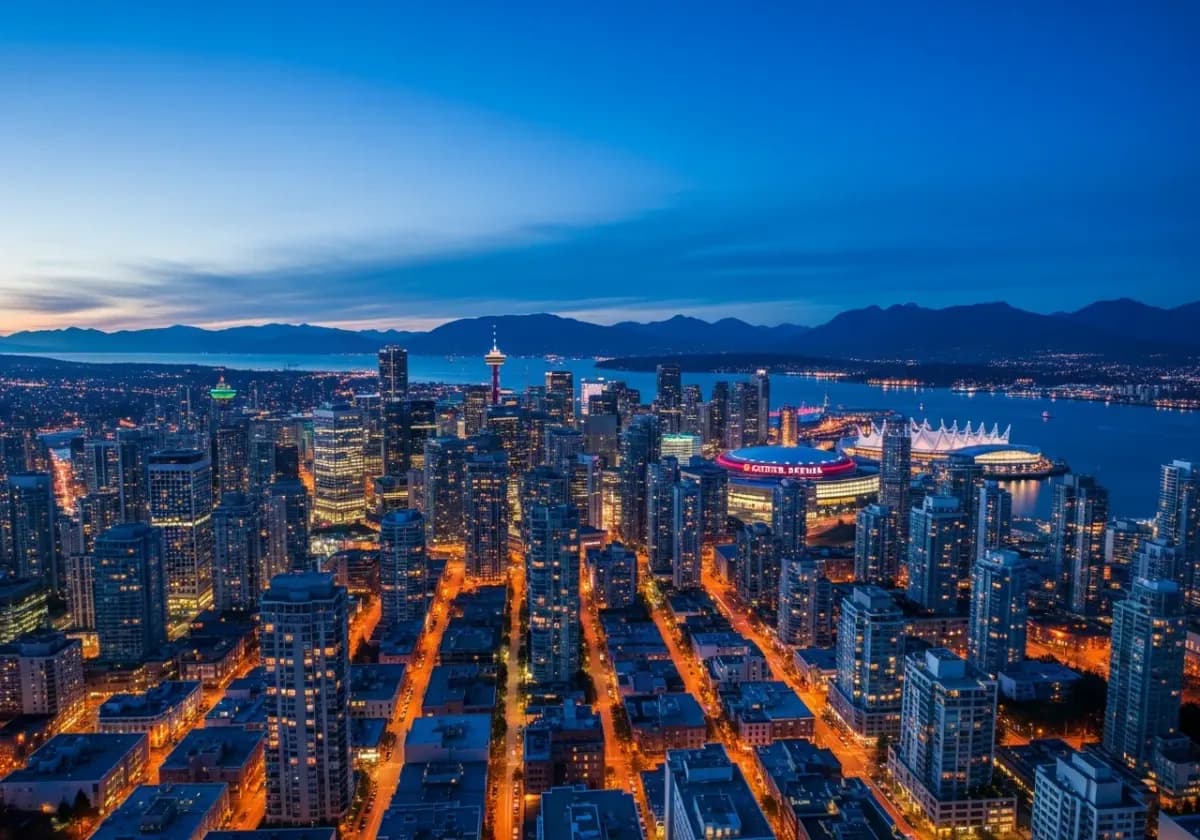
On that measure, Vancouver looked far stronger than Salt Lake City in the archived Spring/Summer 2026 snapshot. Vancouver's major pro venues sat 0.14 miles apart, while Salt Lake City's pro-venue cluster averaged 25.70 miles. Both were commonly named in the public expansion conversation. In that archived snapshot, Vancouver was the only one of the two where a visiting fan could realistically cover a multi-game weekend on foot.
The 10 cities most often named in the current MLB expansion debate, including the 10-market Forbes expansion guide circulating this week, are Charlotte, Montreal, Nashville, Oakland, Orlando, Portland, Raleigh, Sacramento, Salt Lake City, and Vancouver. This is not an official MLB shortlist; it is a snapshot of the public expansion conversation, not a prediction of what the league will do. We score 9 of those 10 cities in the SportCation Index; Oakland is the exception, since the Athletics' relocation pulled it from the dataset.
Why Venue Geometry Matters for the Visiting Fan
Those inputs matter to MLB. They just do not answer the visiting-fan question. A strong sports weekend depends on geometry: how close the venues sit to each other, how the airport connects to the cluster, and whether the city has enough inventory to fill a Friday-to-Sunday window.
The Index weights venue proximity at 15 of its 100 total points, making cluster distance a meaningful component of the Travel Ease score. The narrower 43-city walkability ranking referenced later in this piece is a subset of the Index: the multi-venue cities only, since cluster math requires at least two pro venues to compute. Oakland is out of both datasets for the same reason.
SportCation Index Snapshot for the Expansion Candidates
This table is an archived snapshot from the 2026 Spring/Summer edition of the Index. The Index has since flipped to its Fall/Winter edition — see the live rankings for current scores. It is sorted by total SCI Score, which blends Game Density (40 points), Travel Ease (30), Weekend Cost (20), and Fan Infrastructure (10). Read it as a snapshot of how each city looked at the time; the editorial ranking that follows below sorts by sports-travel upside specifically.
| City | SCI Score | Cluster (mi) | Airport (min) | Rail Tier | Prime Wknds | Median Hotel | Median Ticket |
|---|---|---|---|---|---|---|---|
| Charlotte | 56.1 | 0.77 | 15 | Rail nearby | 3 | $209 | $251 |
| Portland | 55.2 | 1.38 | 30 | Direct rail | 1 | $140 | $331 |
| Orlando | 55.2* | 0.25 | 18 | Rail nearby | 0 | $129 | $39 |
| Raleigh | 54.2* | single-venue | 15 | Transfer rail | 0 | $131 | $170 |
| Vancouver | 53.7 | 0.14 | 25 | Direct rail | 3 | $179 | $391 |
| Nashville | 50.7 | 1.76 | 10 | Transfer rail | 1 | $275 | $147 |
| Sacramento | 49.5* | 2.68 | 15 | Rail nearby | 0 | $268 | $165 |
| Salt Lake City | 48.7 | 25.70 | 17 | Direct rail | 3 | $227 | $95 |
| Montreal | 42.9 | 3.10 | 30 | Transfer rail | 1 | $162 | $414 |
| Oakland | not scored | n/a | n/a | n/a | n/a | n/a | n/a |
* Score present but unranked: the city does not meet the eligibility threshold of at least 1 prime weekend in the active edition.
The highest scorer on this list is Charlotte at 56.1, helped by 3 prime weekends and a 0.77 mi cluster. The lowest scorer is Montreal at 42.9, dragged by a 30-minute airport, a 3.10 mi cluster, and the highest median ticket on the list. Salt Lake City sits in between at 48.7 despite also scoring 3 prime weekends; the 25.70 mi cluster eats most of the city's available Travel Ease points.
What MLB Adds, and What It Cannot Fix
Adding an MLB franchise is two changes at once: it puts 81 regular-season home games on the city's calendar and it places a new venue somewhere in the metro.
The first effect increases the chance of prime weekends, because 81 MLB home dates create many more Friday-to-Sunday overlap opportunities with the city's existing franchises. It does not automatically lift the prime-weekend count; that lift depends on overlap with at least one other in-season franchise on a given weekend. In the archived Spring/Summer snapshot, Orlando sat at zero prime weekends, so even a small number of MLB overlap weekends could have cleared that edition's eligibility threshold. For a city already at 3, the gain is incremental.
The second effect determines whether the existing cluster tightens or breaks, and it depends entirely on where the ballpark is sited. A downtown-adjacent ballpark builds on the existing geometry. A suburban ballpark stretches it.
Editorial Ranking by Sports-Travel Upside
The SCI snapshot above ranks cities on overall index strength. The tiers below are editorial judgment calls based on the archived Spring/Summer numeric inputs in that table, not modeled post-expansion outcomes; they sort each city by how much MLB expansion would specifically help it as a multi-game weekend destination, given the venue-cluster geometry, airport access, and inventory recorded for that edition.
| Sports-travel upside | Cities |
|---|---|
| Best geometry + clear upside | Vancouver, Orlando, Charlotte |
| Good but site-dependent | Portland, Nashville |
| Inventory helps, geometry unproven | Sacramento, Raleigh |
| High-friction fan weekend | Salt Lake City, Montreal |
| Out of scope for this dataset | Oakland |
The Atlanta Precedent
The cautionary case is already in the data. When the Atlanta Braves moved from downtown Atlanta to Truist Park in suburban Cobb County in 2017, the metro's average venue cluster jumped to 6.83 miles per the walkable stadium cities ranking. The downtown pair, Mercedes-Benz Stadium and State Farm Arena, is still walkable and MARTA-connected. Pair them with the Braves and the weekend now splits across two transit realities.
A team that sites the ballpark inside an existing cluster gets the opposite outcome. Vancouver is the cleanest illustration: BC Place and Rogers Arena sit 0.14 miles apart downtown, with Canada Line SkyTrain direct from YVR. A third venue placed near that existing footprint would build on the city's already tight geometry rather than fragment it.
Vancouver, Orlando, Charlotte: the Three Geometry Wins
Vancouver (Spring/Summer 2026 SCI 53.7). Vancouver already has the tightest venue cluster in our 43-city walkability dataset, direct rail from the airport, and 3 prime weekends a season. The constraint is that it has only two major-pro venues today; max stack is 2, big weekends are 0. Adding a third venue near the existing downtown cluster is the kind of change that turns a tight 2-venue city into a top-tier multi-game weekend destination. The size of the lift depends entirely on where the ballpark goes.
Orlando (Spring/Summer 2026 SCI 55.2, unranked). Orlando ranks third in our walkability dataset (0.25 mi average cluster), has the cheapest median ticket in the candidate field ($39), and $129 hotels. The reason it sits at "unranked" with a 55.2 score is one missing input: zero prime weekends in the active edition. 81 MLB home dates per season would create dozens of new Friday-to-Sunday overlap opportunities with the city's existing teams; whether that clears the prime-weekend threshold depends on schedule overlap, but the inventory is the obvious lever.
Charlotte (Spring/Summer 2026 SCI 56.1, leading this candidate list at the time). Bank of America Stadium and Spectrum Center sit at 0.77 miles in the Uptown footprint with three prime weekends a season already, putting Charlotte in the same Walk-Everything tier as Cleveland and Minneapolis in our walkability ranking. A downtown-adjacent ballpark would keep that cluster intact. The pinch point for adding a baseball calendar would be schedule overlap, not geometry: NFL Sundays and NBA winter inventory are already heavily booked.
Salt Lake City and Montreal: the High-Friction Cases
Salt Lake City (Spring/Summer 2026 SCI 48.7). Salt Lake supports 3 prime weekends with its current major-venue set, more than half the candidate list. The geometry is the problem. The current cluster averages 25.70 miles, the worst figure on the candidate list and ranked 42nd of 43 in our published walkability dataset. Even a better-sited MLB ballpark would not erase the existing spread between the metro's current major venues. A new venue adds inventory; it does not pull the metro's average venue distance into the comfortable-walk range. On the current spread, visiting fans typically need a rental car to move between most venue pairs.
Montreal (Spring/Summer 2026 SCI 42.9). Montreal scores the lowest SCI on the candidate list. The 3.10 mi cluster is well past the comfortable-walk threshold (and far from Vancouver's geometry), the airport is 30 minutes from the cluster on transfer rail, and the median candidate-edition ticket is $414, the highest figure in the snapshot table above. There is a romantic argument for restoring baseball to a former MLB market. The sports-travel argument is weaker.
Portland, Nashville, Sacramento, Raleigh: the Site-Dependent Cases
Nashville (archived Spring/Summer 2026 SCI 50.7). Nashville's BNA-to-cluster transit time of 10 minutes was the best on the list. Its 1.76 mi cluster was walkable for some fans, but no longer the effortless two-arena geometry Vancouver or Orlando had; with families, summer heat, postgame crowds, or older fans, that distance was enough to push most trips onto rideshare. The location of any future ballpark would matter as much as the team itself: a downtown site preserves the cluster, while a far-suburban site stretches the geometry the same way Atlanta's Truist move stretched the Atlanta metro.
Portland (archived Spring/Summer 2026 SCI 55.2). Portland had direct rail to the cluster and a 1.38 mi spread in that edition; adding a third major franchise to a 2-venue city is real upside, but a suburban ballpark site would stretch the archived cluster beyond 1.38 miles.
Sacramento (archived Spring/Summer 2026 SCI 49.5, unranked). Sacramento's temporary Athletics inventory at Sutter Health Park should not be mistaken for permanent expansion inventory. The archived 2.68 mi cluster sat at the loose end of the Comfortable Walk tier; new construction would need to be sited carefully to avoid widening it further.
Raleigh (archived Spring/Summer 2026 SCI 54.2, unranked). Raleigh was a single-venue market in that snapshot (the Hurricanes), so the cluster math was undefined. MLB would create a 2-venue cluster from scratch, and the geometry would depend entirely on where the ballpark lands relative to PNC Arena. As an untested multi-team sports-trip market, the upside is real but unproven.
Methodology Note
Scores are pulled from the archived Spring/Summer 2026 snapshot (data/sportcation_index_releases/2026-spring-summer.json, methodology version 2026.1-SS, last regenerated 2026-03-15). The Index has since flipped to its Fall/Winter edition (data/sportcation_index.json); some inputs below, including venue cluster distances for cities with new or relocated venues, have changed since this piece published, so treat the figures here as a dated snapshot rather than today's numbers. See the live rankings for current scores. The cluster distance metric is computed by averaging pairwise haversine distances between major pro venues for each metro using their listed coordinates. Rail tier is operator-curated against transit-agency documentation. Median hotel and ticket values are pegged to the city's recommended sports-trip base area; ticket figures use Ticketmaster live or weekend-baseline prices where available, falling back to 2024-25 team averages. Suburb venues are aliased into their parent metros (Arlington into Dallas, Foxborough into Boston, and so on) per the Index's metro-aliasing table.
The editorial ranking by sports-travel upside is qualitative direction, not a counterfactual SCI simulation. We do not run post-expansion score predictions; the tier table sorts cities on whether their existing geometry plus a typical downtown-adjacent ballpark site would produce a better multi-game weekend, with judgment applied on top of the numeric inputs visible in the snapshot table. The full ranked methodology lives in How We Rank the Best Sports Weekend Cities, and the city-by-city walkability spread is in Walkable Stadium Cities. Oakland is omitted because its current major-venue cluster cannot be measured: the Athletics moved, the Warriors moved, and the Coliseum's MLB tenant is gone.
Whichever city the league eventually picks, the venue cluster, the rail tier, and the weekend inventory already in our data are the inputs that shape what visiting that team will actually feel like.
Don't just watch, Go.
Compare every city on the Index
Vancouver, Orlando, Charlotte — see the full scoreboard.